Salt haze, sticky afternoons, humming ACs — if you live or plan to buy in Sandestin, you know coastal comfort depends on a healthy HVAC. Salt air and high humidity can quietly shorten system life and raise energy costs if you do not plan ahead. The good news is you can protect your investment with the right equipment, smart maintenance, and a few storm‑season habits. In this guide, you will learn what matters in our Gulf climate, what to ask for when buying or selling, and how to keep your system running strong. Let’s dive in.
Why Sandestin’s salt air matters
Sandestin and Miramar Beach sit on Florida’s Emerald Coast, where warm temperatures and high humidity are the norm. Local climate data show consistently humid conditions that increase the dehumidification load on your system and the risk of indoor moisture issues. Regional climate references confirm these patterns.
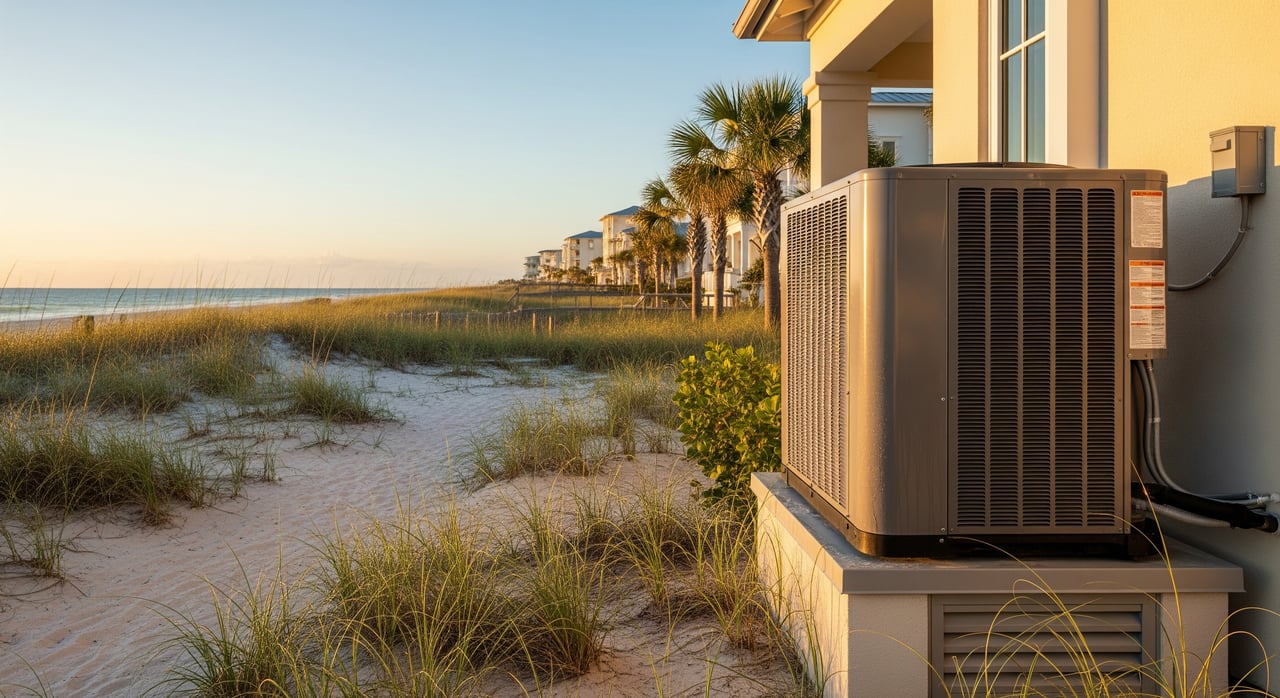
Salt aerosols travel inland with sea breeze. The most intense salt deposition occurs very near the shoreline, yet measurable effects can extend roughly a half to one mile inland depending on winds and terrain. That proximity guides how you choose equipment and set your maintenance schedule. Architectural corrosion guidance explains the distance effect.
Why this matters: salt and moisture accelerate corrosion on outdoor units and can damage electrical components, which reduces efficiency and shortens service life. Industry guidance on salt‑resistant air conditioners outlines these risks.
How salt and humidity damage HVAC
Outdoor coil and cabinet corrosion
Salt deposits trap moisture on condenser coils and fins. Over time, coatings break down, heat transfer drops, and leaks can form. Panels, screws, and base pans also rust, leading to vibration and airflow problems. Learn how salt exposure undermines performance.
Electrical and control issues
Salt plus moisture can oxidize terminals, contactors, and sensors. That buildup causes intermittent faults, nuisance shutdowns, and premature part failure. Regular inspection of sealed control boxes and connections helps catch problems early.
Indoor humidity and air quality
High outdoor humidity raises runtime and can promote mold in drain pans, evaporator coils, and ducts if moisture is not managed. The U.S. EPA recommends keeping indoor relative humidity below about 60 percent, ideally 30 to 50 percent. Whole‑home dehumidification or systems with strong latent removal can help. See EPA’s indoor air guidance.
Choose coastal‑ready equipment
Coastal models and warranties
Ask your contractor about a model’s coastal designation and seacoast warranty terms. Some brands build variants with heavier cabinet coatings, corrosion‑resistant coils, and sealed electrical compartments. Carrier documents coastal product options and specific corrosion coverage.
Coils and protective coatings
All‑aluminum condenser coils or factory‑protected coils typically fare better near the water. Trane and other OEMs publish coil options and coastal considerations. If you are protecting an existing system, a properly applied thin conformal coating can add years. Choose products with independent test data and experienced applicators. This coil coating overview explains best practices.
Materials and installation
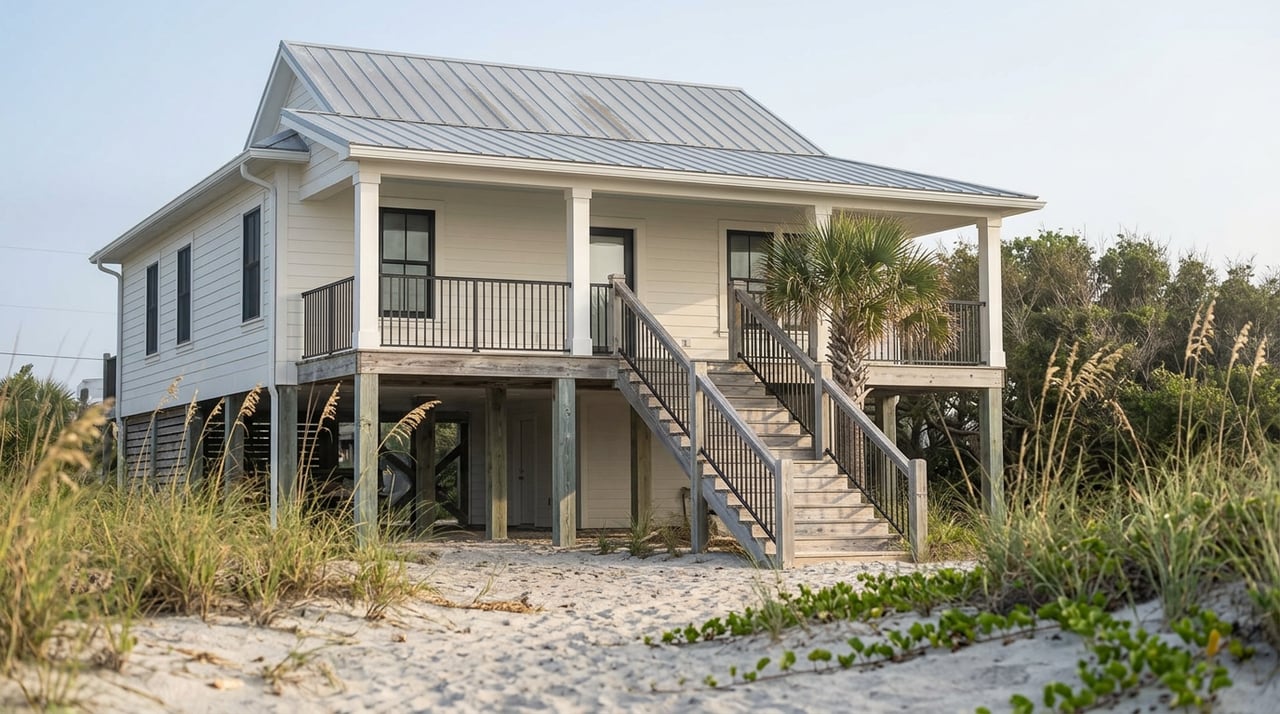
Prioritize stainless or zinc‑plated fasteners, polymer base pans, sealed control boxes, and corrosion‑resistant condensate components. In coastal Florida, elevation and anchoring are also key. Raise outdoor units above expected surge or flood levels, allow rinse access, and use proper tie‑downs. See Florida‑focused installation tips.
Maintenance by distance to the Gulf
Your address relative to the shoreline should shape your plan. Here is a practical starting point you can tailor with your contractor:
- Within about 0.25 to 0.5 mile of the beach: pro inspection and coil cleaning every 3 months, gentle fresh‑water rinses every 2 to 4 weeks during peak season, and monthly filter changes. Coastal service guidelines recommend frequent rinsing and cleaning.
- About 0.5 to 1.5 miles inland: professional service twice per year, with homeowner rinsing every 4 to 8 weeks and filter changes every 1 to 3 months. Adjust if corrosion appears or indoor humidity runs high.
- Farther inland with lower exposure: semi‑annual tune‑ups typically suffice. Increase frequency if you see rust, pitting, or reduced efficiency.
Homeowner monthly tasks
- Check and replace filters as needed, especially in summer.
- Keep 2 to 3 feet of clearance around the outdoor unit and remove debris.
- Rinse the condenser cabinet and coil exterior with fresh water using low pressure. Simple rinsing can reduce salt buildup.
Pro service checklist
- Clean and straighten coils and fins.
- Inspect electrical terminals and control boxes for corrosion.
- Verify refrigerant charge and pressures, lubricate as recommended.
- Flush condensate drains and check float switches.
- Inspect refrigerant line insulation and anchor or tie‑down condition.
- Reapply protective sprays or coatings where specified.
Keep indoor humidity in check
Aim for indoor RH ideally 30 to 50 percent and do not exceed about 60 percent. If your home struggles to stay in range, consider a whole‑house dehumidifier or equipment with better moisture removal. EPA guidance supports these targets.
Storm‑season prep for Sandestin
Before a storm: secure loose yard items, verify unit tie‑downs, and consider shutting the system off at the thermostat and breaker if a direct hit is likely to prevent operation during flooding or severe power events. Use only manufacturer‑approved breathable covers and never run a covered unit. After a storm: do not restart equipment that was submerged or visibly damaged. Have a licensed HVAC pro inspect electrical components and controls before restoring power. Follow Ready.gov hurricane safety guidance.
Cost and lifespan near the coast
Severe coastal exposure can shorten service life without protection, sometimes to 5 to 8 years for outdoor units that see heavy salt and little care. With coastal‑rated models, protective coatings, and diligent maintenance, you can extend useful life toward or beyond 10 years. Budget for more frequent maintenance and plan for earlier replacement near the water. See industry insights on salt‑resistant equipment and longevity.
Buyer and seller checklist
Use these quick checks to protect comfort and value in Sandestin transactions.
- Ask for service records that show regular rinsing, coil cleanings, and professional tune‑ups.
- Confirm make, model, and serial numbers. Verify if the unit is a coastal‑rated model or has factory coil protection. Request the written warranty and check any seacoast conditions. Carrier’s coastal documentation is a helpful reference.
- Inspect elevation and anchoring. Note visible corrosion like pitting, flaking paint, rusted fasteners, or corroded electrical terminals.
- If coatings were applied, ask for the product name and installer details and request any test data.
- When replacing equipment, ask for the coil type, fastener materials, sealed control box details, and an installation plan for elevation and tie‑downs. Request a maintenance plan matched to the home’s distance from the Gulf.
Ready to talk through a specific Sandestin property or plan a smart pre‑listing tune‑up and checklist? Connect with the local team that guides buyers and sellers through coastal details every day. Reach out to The Babe Group for tailored advice and next steps.
FAQs
What does Sandestin’s salt air do to HVAC systems?
- Salt and humidity accelerate corrosion on outdoor coils, cabinets, and fasteners, and can oxidize electrical contacts, which reduces efficiency and shortens service life.
How close to the Gulf is “high exposure” for HVAC care?
- The most severe salt deposition occurs very near the shoreline, with measurable effects often within about 0.5 to 1 mile inland, so homes closest to the beach need the most frequent maintenance.
What indoor humidity should you target in Miramar Beach homes?
- Aim for 30 to 50 percent relative humidity and stay under about 60 percent to reduce mold risk and improve comfort.
Do you need a coastal‑rated unit in Sandestin?
- If the home is oceanfront or within several tenths of a mile of the Gulf, a coastal‑rated model or factory coil protection is strongly recommended for longevity and warranty benefits.
How often should you change filters near the coast?
- Plan for monthly changes during peak cooling season and every 1 to 3 months the rest of the year, adjusting for occupancy and dust levels.